
While Q4 technically starts in October, most brands already have much of their holiday strategy locked. Inventory positioning, pricing strategy, and content optimization have to be in place before peak traffic hits.
This year, that planning also has to account for a changing customer journey. More shoppers are asking Alexa for Shopping for recommendations instead of scrolling through search results, making the shopping agent a new gatekeeper. If a brand's content is not structured for how the agent evaluates and recommends products by the time peak search volume hits, the brand risks being filtered out before the holiday season even starts.
The deadlines brands are working against
Amazon moved its Q4 deadlines earlier again this year, with deal submissions for Black Friday and Cyber Monday opening July 8 and early-submission incentives already expiring in August. Meanwhile, Cyber Five inventory needs to reach Amazon's network in October, just as holiday fulfillment fees begin.
Deal windows have already closed
Brands that submitted deals by July are eligible for the promotional placements that drive much of holiday traffic; those that did not are not. Amazon does not reopen those windows, so brands that missed them spend the season competing without the placements their competitors have. That puts more weight on the levers that are still open.
Inventory is the deadline brands can still act on
Inventory is one of those levers, but the window closes within weeks. Brands that ship inventory after the mid-to-late October AWD and FBA cutoffs either receive stock after peak demand or pay inbound delays and higher fulfillment and freight costs to get it there on time.
The new AEO challenges brands face in 2026
Missing one of those deadlines can cost brands placements they cannot buy back and can result in inventory arriving too late. But beyond the usual holiday preparation, a shift in how shoppers find and buy products introduces a new set of challenges this year.
Shoppers will rely on shopping agents
Many shoppers who used to scroll through search results are now using an AI shopping agent as their entry point to product discovery. Amazon reported that active users of Alexa for Shopping nearly doubled year over year in Q2 2026. If a brand's content is not structured for the way the shopping agent evaluates products, it is excluded from Alexa for Shopping recommendations.
Brands also lose the highest-intent shoppers, since shoppers arriving through the agent compare fewer options before deciding to buy.
Shopping agents will complete purchases
For the first time this holiday season, Alexa for Shopping will also act on shoppers' behalf through Scheduled Actions, which lets shoppers set up gift research ahead of a holiday or event and have the agent build a shortlist or add items to a cart. Then the Buy for Me action completes the purchase, so some holiday gift buying can happen with shoppers minimally involved.
How brands can protect holiday margin and visibility with September decisions
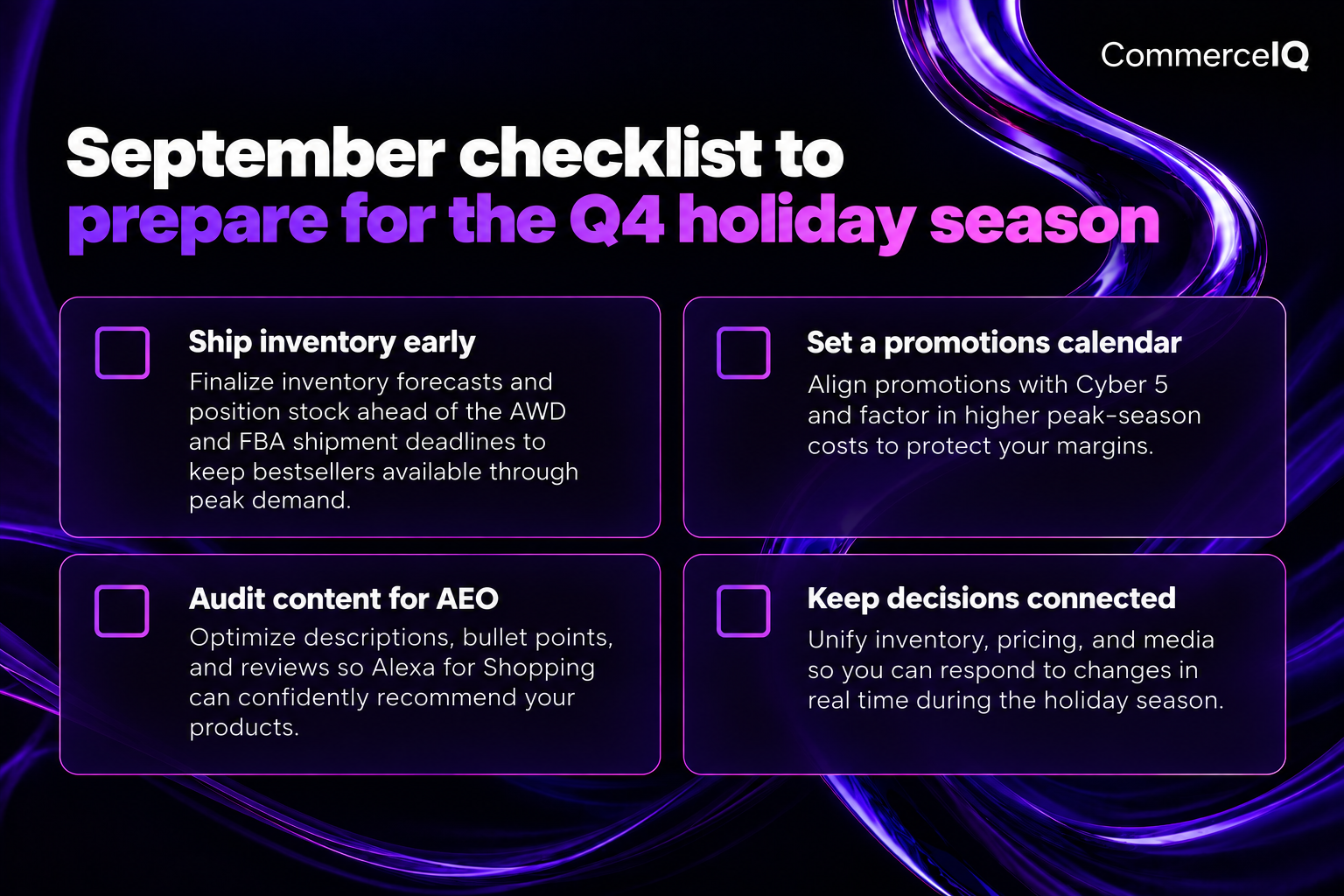
1. Ship inventory early
Brands that finalize inventory forecasts and position stock ahead of AWD and FBA shipment deadlines keep bestsellers available through peak demand. A stockout on a top SKU is the most expensive and preventable holiday loss, because it costs brands the sale at the moment traffic is highest.
2. Set a promotions calendar
Brands that set a calendar tied to Cyber Five protect their margins better than brands that discount broadly and often once the season starts. Promotion depth needs to account for the higher costs that begin during peak season: Amazon's peak fulfillment surcharge runs from October 15 through January 14, and a 3.5% fuel and logistics surcharge also applies to fulfillment fees. A discount that protects margin in September may leave less margin on a November sale.
3. Audit content for AEO
Alexa for Shopping decides which brands shoppers see, so a product that does not make the shortlist never gets considered. The shopping agent recommends products that are optimized so it is clear what the item is and who it is for. Brands should audit descriptions, bullet points, and reviews to determine whether listings do this well enough for the agent to recommend the product with confidence.
Keeping content optimized as marketplace criteria change is what consistently gets brands recommended, and an agentic retail platform makes that possible across an entire catalog.
4. Keep decisions connected
Inventory, pricing, and media decisions have to stay unified once the holiday season starts, since a stockout or a competitor's price change can change which products brands should bid on within the same day. Teams working with a single view respond to changes the day they occur rather than the following week.
Brands should prepare for how shoppers shop now
Brands that get ready in September will be the ones on Alexa for Shopping's shortlist when holiday traffic peaks. That means inventory, pricing, and content have to work together to give the shopping agent confidence to recommend their product.
Brands that wait until November risk being excluded from consideration and will then have to compensate with larger ad budgets to recover traffic and deeper discounts to drive conversion. An agentic retail platform like CommerceIQ can keep these decisions connected as conditions change throughout the holiday season.
Ready to keep inventory, pricing, content, and retail media decisions connected through the holiday season? Book a demo with CommerceIQ.